
Epistemic and Ontic Randomness - Book Excerpt #12

This is section III.1 (that builds upon the previous section here) of the first volume of my book, “Quantum Physics: An Overview of a Weird World.” I plan to post regular updates, including minor and substantial revisions, on Substack. For the full table of contents and guidance on how to follow the book as it unfolds, please click here.
In the previous post we have seen that “wave–particle duality” does not mean a photon literally switches between being a wave and a particle, rather, quantum objects behave in ways that resemble both concepts depending on the experimental setup. The double-slit experiment shows this most clearly: what propagates through the slits behaves like a wave, producing an interference pattern, but what is actually detected are always localized, particle-like events (individual photon hits). Even when photons are sent one at a time, the interference pattern gradually emerges, implying that each photon somehow contributes to a wave-like distribution while being detected as a discrete point. This challenges classical intuition and suggests that quantum entities are neither simple particles nor waves, but something fundamentally different that is only described probabilistically and revealed through measurement.
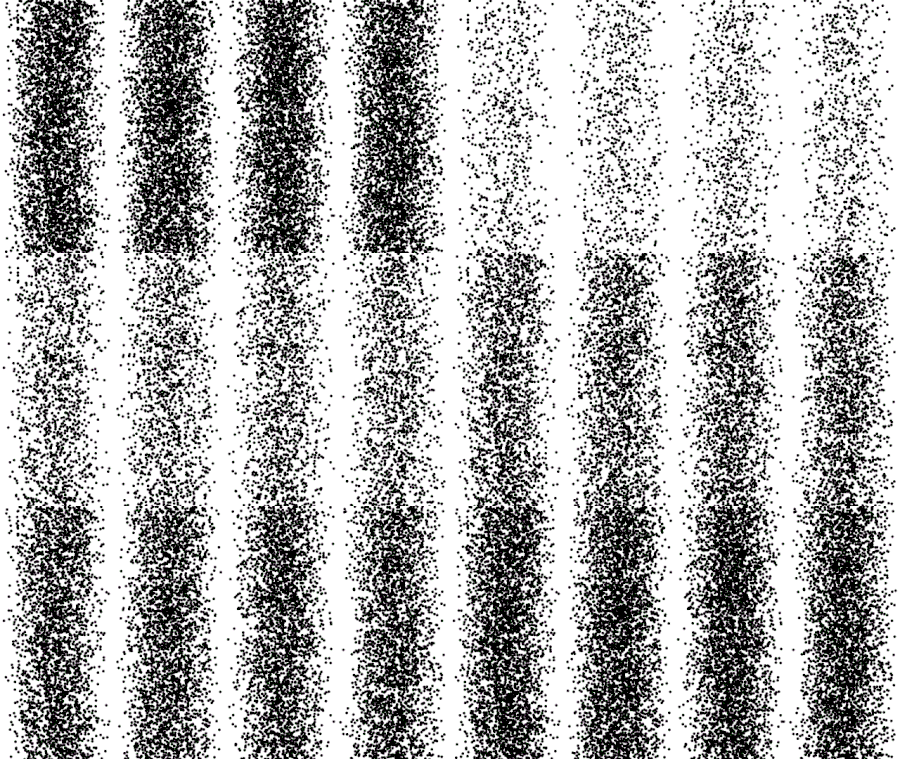
An important aspect always to keep in mind is that the process is completely random in the following sense. Were we to look at this interference pattern only at a small local scale (again, with a microscope as in Fig. 1) and without knowing how the rest of the interference picture is made, there would be no way to know if the single white dot on the detector screen is the result of an interference phenomenon through the two slits or a single photon coming from a source with or without the slits in between. It is only when we look at the global picture that we can infer that interference must have taken place. In this sense we say that QP is governed by purely probabilistic or stochastic laws. We can say that there is a certain probability that a photon is detected in a specific position, but we will never be able to tell in advance what this single event will turn out to be. We can only predict what will happen statistically, after a high (statistically significant) number of events have taken place. When such a number is collected, the overall disposition of the photons on the detection plane always obeys the classical interference laws, with its typical geometrical disposition of the dark and white fringe pattern. The single event, however—the displacement of a single photon on one or the other fringe—is a purely probabilistic event.
There is a higher probability that the single photon will be detected on the brighter fringes, but there is no way, no method at all, not even in principle, to predict in advance which of the fringes the single photon will be detected on. Despite its name, quantum mechanics does not provide a deterministic, mechanistic account of causal processes specifying where and when an event takes place; rather, it furnishes a probabilistic formalism that yields statistical predictions for measurement outcomes, without specifying the underlying dynamical mechanism by which a particular outcome is realized at a given time and location. As we shall see, there are good reasons to conclude that no such underlying mechanism exists in the first place—or, in the language of quantum foundations, no hidden variables exist.
This hints at a quite different conception than what we intend in classical physics with the words “randomness,” “chance,” and “coincidence.” In classical physics the side of the die that faces up after having been tossed is said to be a “random result,” in the sense that the physical process which determines how the die rolls on a table is so complicated and practically impossible to calculate that the outcome is unpredictable. But in principle, if we would know everything about the die, the forces that act on the die, how it is thrown on the table, every detail about the table itself, and the precise initial conditions of the system, we could ideally predict the outcome with a supercomputer that knows everything about the laws of classical mechanics. In principle, that would not be impossible.
The throw of a die manifests a form of randomness, or indeterminism, that arises from our inability to specify and predict the exact state of a system and thus reflects a limitation of our knowledge. For this reason, it is referred to as epistemic randomness or epistemic indeterminism. Classical mechanics is about the description of exact physical states quantified by exact quantities, for example, the precise position of a particle at a given time. It conceives only of epistemic randomness or indeterminism, there is no conception of an inherent uncertainty independent from our observations and intrinsic in the things themselves, otherwise called ontological or ontic randomness or indeterminism.1
This classical determinism has its roots in a way of thinking which is nicely summarized by Laplace’s demon. P. S. Laplace was a French mathematician and astronomer of the nineteenth century who reasoned as follows.
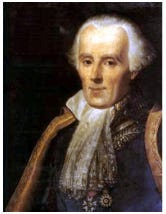
“We may regard the present state of the Universe as the effect of its past and the cause of its future. An intellect which at a certain moment would know all forces that set Nature in motion, and all positions of all items of which Nature is composed, if this intellect were also vast enough to submit these data to analysis, it would embrace in a single formula the movements of the greatest bodies of the Universe and those of the tiniest atom; for such an intellect nothing would be uncertain and the future just like the past would be present before its eyes.”
This determinism is (more or less consciously) still the leading paradigm in science. If someone—here, the intellect of Laplace’s demon—knows the precise position and momentum of every particle in the Universe, its dynamical evolution for any given time could be calculated with certainty from the laws of physics. But we will see repeatedly during this journey through the weird world of quantum physics that this is an assumption that can no longer be considered true in the quantum domain.
QP suggests that, at the microscopic level, ontic indeterminism governs physical events: individual outcomes lack a determinate cause, they are, so to speak, ``a-causal”, and only the probability distribution constraints them. In the double-slit experiment, this distribution is given by the interference pattern, where the nodes (the regions with no particle count between the fringes) correspond to points of vanishing detection probability.
Thus, when and where an individual photon passing through the two slits will strike the detection screen—and therefore which interference fringe it will contribute to—is fundamentally unpredictable. Quantum mechanics does not provide a rule that determines the exact position of each photon. Instead, it describes the situation in terms of probabilities: it tells us how likely it is for a photon to be detected at each point on the screen. Only after many photons have been detected does a clear interference pattern emerge, reflecting this underlying probability distribution.
Another important point, often overlooked and seldom mentioned, is that quantum randomness manifests not only spatially (in the double-slit experiment in the spatial distribution of dots on the detection screen) but also temporally. The temporal sequence of detection events on the screen is also entirely random (see the animation of Fig.1). For example, one possible time-series might be: photon 1 hits pixel 1 at time t1, photon 2 hits pixel 2 at time t2, photon 3 hits pixel 3 at time t3, and so on. However, this particular order is purely stochastic. It could just as easily have occurred in any other permutation, for instance: photon 1 hits pixel 3 at time t1, photon 2 hits pixel 1 at time t2, photon 3 hits pixel 2 at time t3, etc.
Even if we know everything about the system and the initial conditions of a single particle, the single event will remain forever unpredictable. Not because of our ignorance, as Laplace believed, even if we have a “demon” which knows everything and is able to calculate quickly and precisely enough. It seems that in QM things are not random in the classical sense, but this randomness is an inherent aspect of Nature. We shall take up this issue again in the following chapters.
“Epistemic” refers to what concerns knowledge—its limits, uncertainty, and what we can or cannot know about a system. “Ontological” or “ontic“ refers to what concerns reality itself—the way things actually are, independent of our knowledge or observation.